
Paddlesport participation is at an all-time high, but so is the risk of cold water shock. In 2024 alone, there were 193 accidental water-related fatalities in the UK. Many of these tragedies occurred not because of poor swimming ability, but due to the body's involuntary response to cold water.
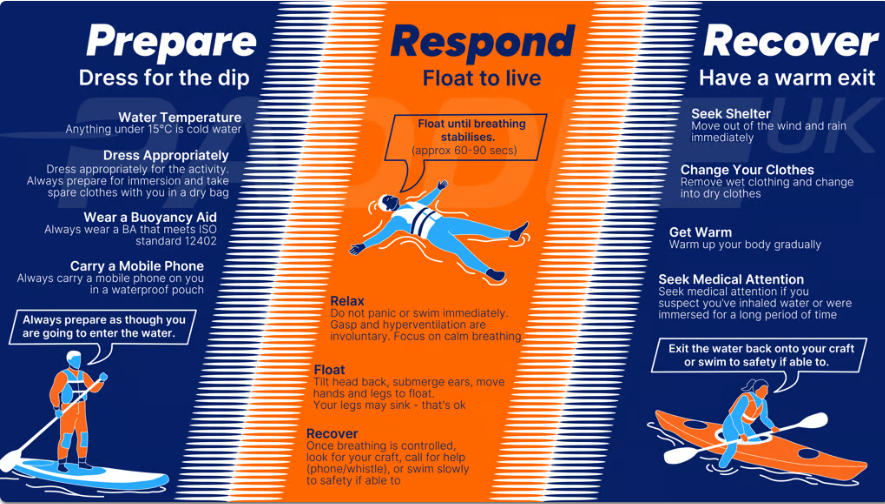
Any water temperature below 15°C is classified as cold water and low enough to trigger a shock response. With UK and Irish coastal waters averaging only 12°C, and many inland rivers staying even colder throughout the year, the risk remains high regardless of the season. This infographic was developed to provide every paddler with the information for the “autopilot” needed to survive those first critical seconds.
When you enter cold water unexpectedly, your body doesn’t ask for permission to react; it enters a state of physiological panic.
- The Involuntary Gasp: The sudden drop in skin temperature triggers a massive intake of air. If your head is underwater, you will inhale water directly into your lungs.
- Hyperventilation: Your breathing rate can increase by up to 10 times. This leads to panic and a feeling of suffocation.
- Cardiac Stress: Your blood vessels constrict instantly, causing a spike in blood pressure that can lead to cardiac arrest, even in healthy individuals.
How to handle cold water shock and minimise the risk:
- Prepare: Dress for the dip
Wear a buoyancy aid, carry a phone in a waterproof case, and always dress appropriately along with packing a spare change of clothes. - Respond: “Float to Live”
Fight the urge to thrash and “float to live” until breathing becomes more regular. Call for help, and if able to, swim to safety. - Recover: “Have a warm exit”
Seek shelter, remove wet clothing and warm the body up gradually. Always seek medical attention if you suspect you've inhaled water or are suffering from hypothermia.
For full information, please click here.
Share Post

Recreational Paddlers Survey 2026

Paddle UK - Safety Management of Supplementary Securing Systems, Straps, and Spraydecks
Paddle UK - Remote Supervision