
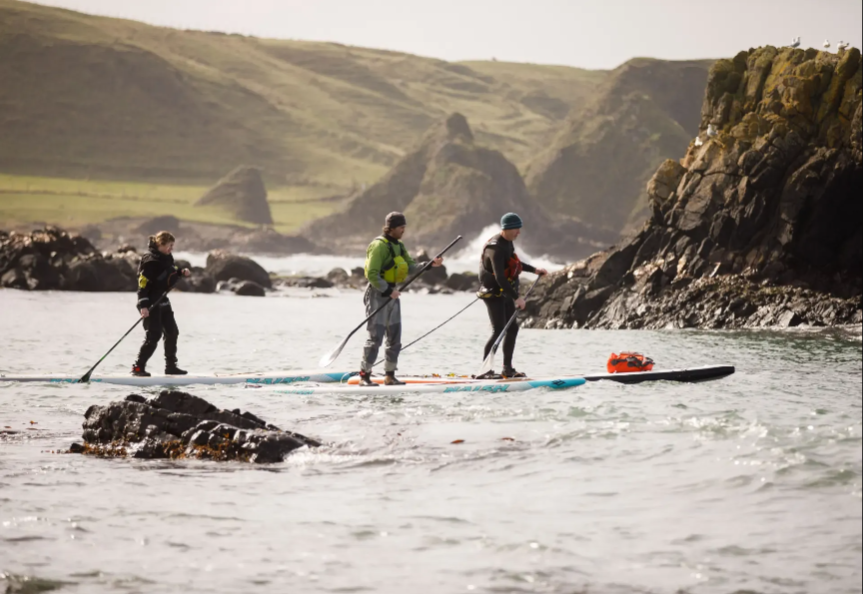
Offshore Winds and their effects on Stand Up Paddleboards
Ben Hamilton • 22 May 2025

HOME / NEWS / Current Post

Offshore Winds and their effects on Stand Up Paddleboards

Stand Up Paddleboarding (SUP) has experienced a surge in popularity in recent years. However, along with this growth in participation, there has also been a substantial increase in the number of individuals encountering difficulties while out on their SUPs. 

Recent statistics released by the RNLI show that offshore winds have been a significant contributor in Stand-Up Paddleboarders getting into trouble. 


Paddle UK’s current and one of the most important guidance is for Stand Up Paddleboarders to avoid offshore winds


Our latest offshore winds research provides clear evidence of the significant impact that moderate offshore winds have on SUP paddlers and that 30mins in a Force 4 wind (18-20 mph) a paddler could drift approximately 1 mile.


The research also indicates that a Stand Up Paddleboarder, if caught out in an offshore wind and unable to paddle to the shore, can reduce the amount of distance they drift by adopting the SUP Brake Position (SBP)


For more information and guidance read our Abstract from Research and associated guidance.


Click here to listen to the offshore winds research podcast with Lee Pooley, Director of Coaching and Qualifications at Paddle UK, and researcher Darren Sherwood that discusses the methodology and sampling behind the research as well as the findings and recommendations.


Share Post
by Ben Hamilton 25 November 2025
The RNLI has released a serious warning after a recent rescue of three experienced sailors in Devon. While all three were saved, only one of their lifejackets worked correctly. A recent RNLI survey in the South West of England uncovered a shocking statistic: out of 803 lifejackets checked, 523 had faults. Based on reporting from the BBC News article . To help keep paddlers safe on the water we recommended following our guidance on buoyancy and lifejackets as found in our Paddle Safer document 2.2 Buoyancy Aids. Buoyancy Aids In most cases of paddlesport activity a buoyancy aid is worn and that regular checks are needed to be carried out to ensure it remains in good working order. Here is some useful information on how to check and maintain your buoyancy aid. Lifejackets In some circumstances lifejackets are worn, and that the appropriate checks need to be completed to ensure it remains in good working order. The RNLI have produced some guidance on How to check and maintain your lifejacket.
by Ben Hamilton 25 November 2025
Sport NI Crowdfunder - Creating Opportunities Information Sessions
by Lyn Sherriff 4 November 2025
2025 AGM
View More